
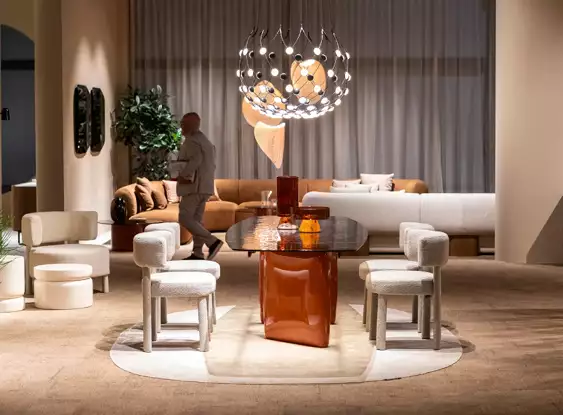
The 64th Salone del Mobile.Milano, the international furniture exhibition, kicked off at the Milan International Exhibition Center. It attracted about 1,900 exhibitors from 32 countries and 227 brands. Simultaneously, the Milan Design Week was also held in the city. At this top-level design event worldwide, although furniture accessories are not as indispensable as functional furniture, they have become the "soul" that lights up the space and conveys the aesthetic of life with their unique poetry and story-telling qualities. The international furniture accessory exhibition area showcased a variety of new product previews, presenting the diverse evolution directions of technology and style.
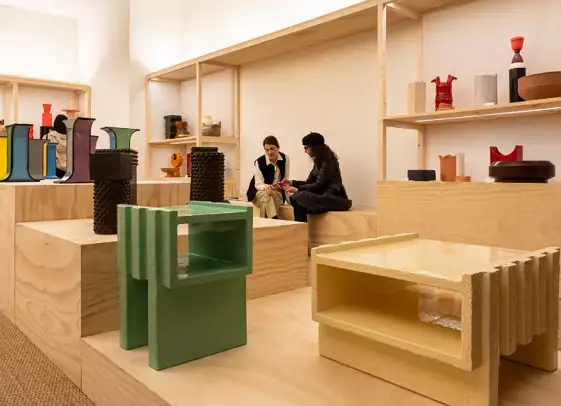
The definitions of furniture accessories and decorative items have always been difficult to precisely define. Compared to functional furniture such as chairs, dining tables, and beds, which merely fulfill basic needs of sitting, eating, and sleeping, these decorative items, with their rich and diverse, yet unclassifiable forms, play a crucial role in daily life. These objects leave marks, tell stories, and infuse poetic atmosphere. Even in the most cozy spaces, without their embellishment, the inspiration and warmth that touch the heart would be lost.
The International Furniture Accessories Exhibition area at this year's Milan International Furniture Fair showcases the astonishing diversity of its exhibits, making the value of decorative items concrete and tangible. The exhibition area comprehensively presents the evolution paths of technology and style, highlighting the development concept oriented towards design. While adhering to the quality of craftsmanship, it pursues innovation and provides more comprehensive solutions for contemporary living spaces.
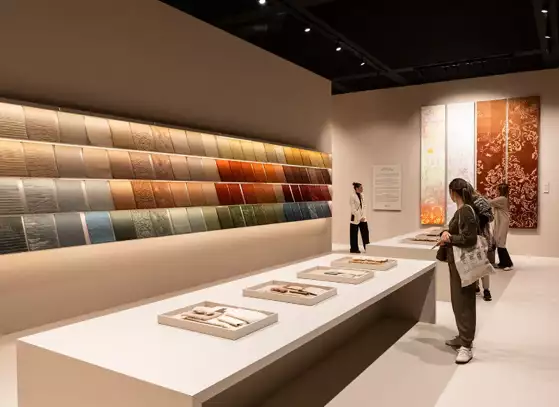
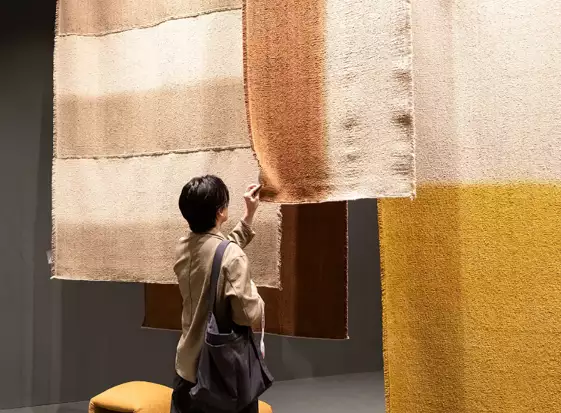
As a long-standing category of accessories, carpets have become an important carrier for contemporary design research. Although the uses, materials and techniques of carpets may be constantly evolving, their value is not solely determined by scarcity. The design concept and its implementation are the core competitiveness. The Amini brand presents four carpets designed by Altherr Désile Park, inspired by the four natural elements of earth, water, air and fire, integrating the beauty of nature into the fabric; Nanimarquina focuses on the personal style and design language of artist Lucia Eames. As the daughter of American design masters Charles Eames and Ray Eames, Lucia Imes' concrete designs often incorporate natural elements and organic forms. These classic motifs are ingeniously woven into the carpet texture. Through experiments with fiber materials, they convey her sensuous expression with architectural depth. The Italian furniture brand Calligaris continues to explore the diversity of carpets in living spaces. Its Nest carpet features an irregular circular design, inspired by the stacking of polished stones. It is made from polypropylene through mechanical weaving and is suitable for various scenarios such as living rooms and dining rooms, combining practicality and flexibility.
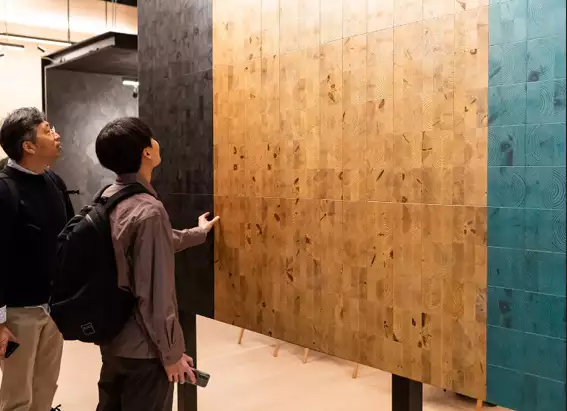
Under the carpet, the floor decoration also takes on a new life through innovative geometric designs. The Supernova parquet flooring by the Listone Giordano brand, designed by Pietro Olioso, draws inspiration from the physical forms of the stars and light. Its wood inlay modules feature concave and convex designs, which, when pieced together, form unique decorative patterns. The light and shadow reflections on the wood surface further enhance the patterns' unpredictable iridescent effect, infusing the floor space with a dynamic atmosphere.
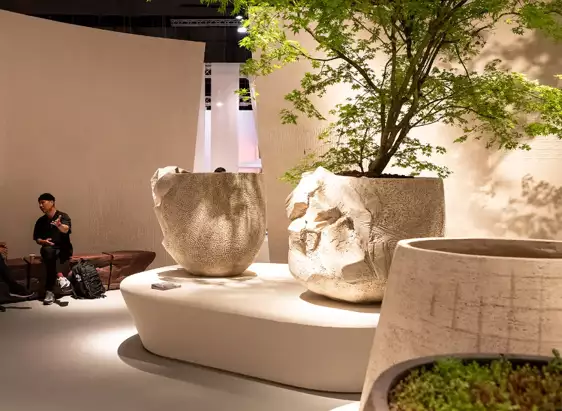
Vases, as a classic category in the field of furniture accessories, also presented numerous innovative expressions at this exhibition. Bitossi Ceramiche continued its brand's historical heritage and collaborated deeply with designer Martino Gamper to launch the new Diptych series of vases. This series is made using the white porcelain injection process, creating a set of complementary style vases. Organic lines and simple straight lines alternate, achieving a dialogue and collision between geometric forms. The Belgian brand Atelier Vierkant showcased its uniqueness through size breakthroughs. Its large ceramic work, Archae & Petrae, features neutral tones and a simple, ancient and heavy shape, which can naturally blend into outdoor spaces and seamlessly integrate with natural landscapes, conveying a raw and pure aesthetic.
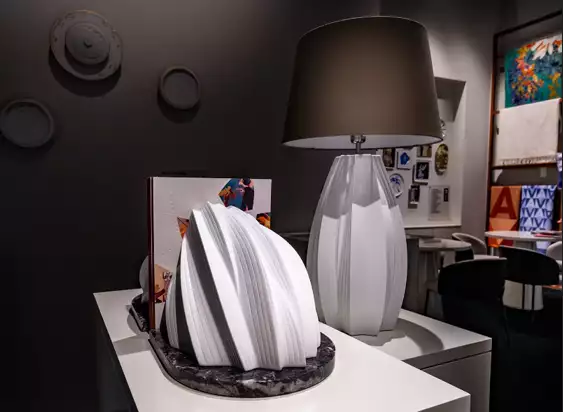
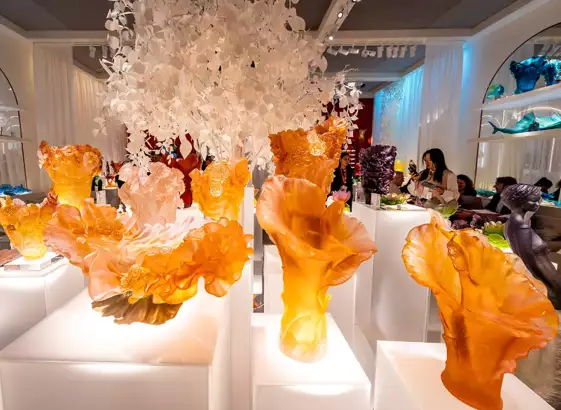
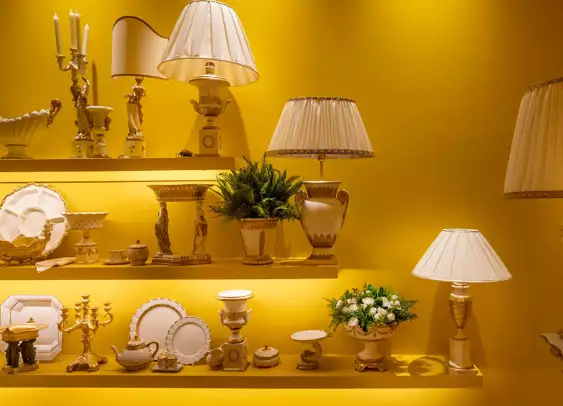
The new products in the porcelain and glass fields are also full of highlights. The Venetian brand Villari returned to the Milan Furniture Fair and reinterpreted the brand's classic decorative art style archive. Its signature piece Lady V table lamp launched a new cream-colored version, recreating the classic charm with a low-key and restrained design. The Portuguese century-old brand Vista Alegre (founded in 1824) is an important guardian of the country's porcelain, ceramic and crystal processing traditions. It also brought several preview new products. Among them, the Breeze crystal tableware series features a diagonal cutting grid pattern, and the Halo table lamp combines handcrafted black vitreous firing porcelain with hand-cut satin crystal, fully showcasing the unique charm of the decorative art style.
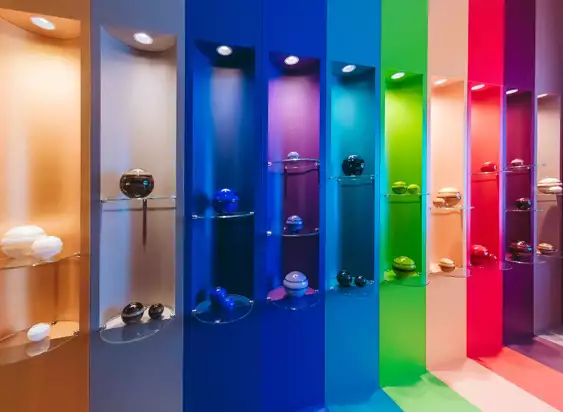
The Daum brand, originating from the southern city of Nancy in eastern France, is rooted in the local Art Nouveau glass craftsmanship tradition. This exhibition introduced its iconic Tulipe (hyacinth) series in a new version, adding the 49th unique color tone, which lies between amber and pink, being gentle and textured. The Venini brand brought the Volcano series of wall panels. This is a reinterpretation of the wall panels designed by Manfredo Vaccari Giglioli for Cassa di Risparmio di Cento in the 1970s. Each wall panel has a smooth surface and warm color tone, as if flowing volcanic magma. It is paired with an integrated adjustable lighting system, which can flexibly adjust the brightness and color to achieve a perfect fusion of light and glass.
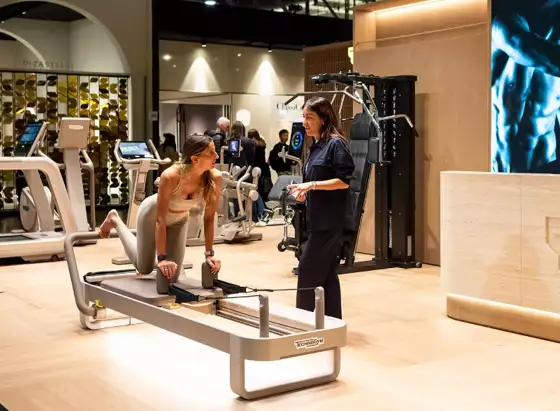
In addition to traditional accessories, the concept of a healthy lifestyle has also permeated the accessory designs at this exhibition. As exercise and fitness have increasingly become an integral part of daily life, the health attributes of living spaces and leisure spaces have received greater attention. The Sand Stone presented by the leading Italian sports equipment brand Technogym is not a specific product, but rather a new aesthetic concept. Inspired by the colors and textures of Mediterranean sandstone, the traditional black color of fitness equipment has been changed to beige, allowing equipment such as treadmills to better integrate into the sensory experience of home spaces and become a new "living machine" in the family environment.
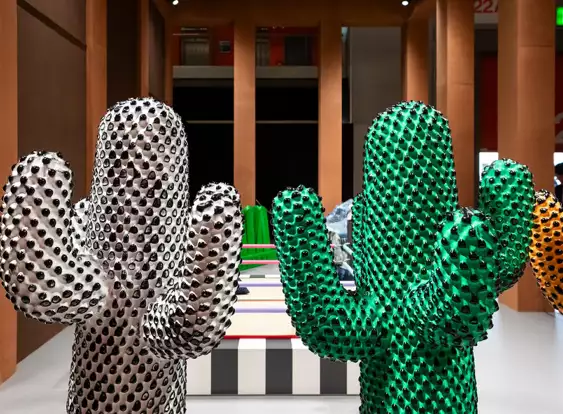
Finally, the ultimate significance of home accessories lies in infusing joy and happiness into the domestic life. The Italian avant-garde design brand Gufram has a deep understanding of this. At this exhibition, they recreated and launched the classic work Fachiro, a bean bag chair covered with sharp spikes. Its seemingly "unfriendly" surface is highly attractive, and with a satirical design that breaks people's perceptual inertia, this design also confirms that: breaking rules, surpassing expectations, especially in a fun way, is precisely the core of maintaining vitality in the field of home accessories.
At this year's Milan International Furniture Fair, furniture accessories demonstrated their value as "the finishing touch for spaces" through diverse forms, profound design heritage and innovative concepts. From carpets, vases to floor decorations and fitness aesthetics, these accessories not only serve as decorations for spaces, but also embody a lifestyle and design spirit. In the collision of handmade quality and modern innovation, they have opened up broader possibilities for contemporary living aesthetics.

